U.S. Amphibious Assault Ship USS Tripoli Spotted Transiting Singapore Strait, Bound for Middle East Deployment
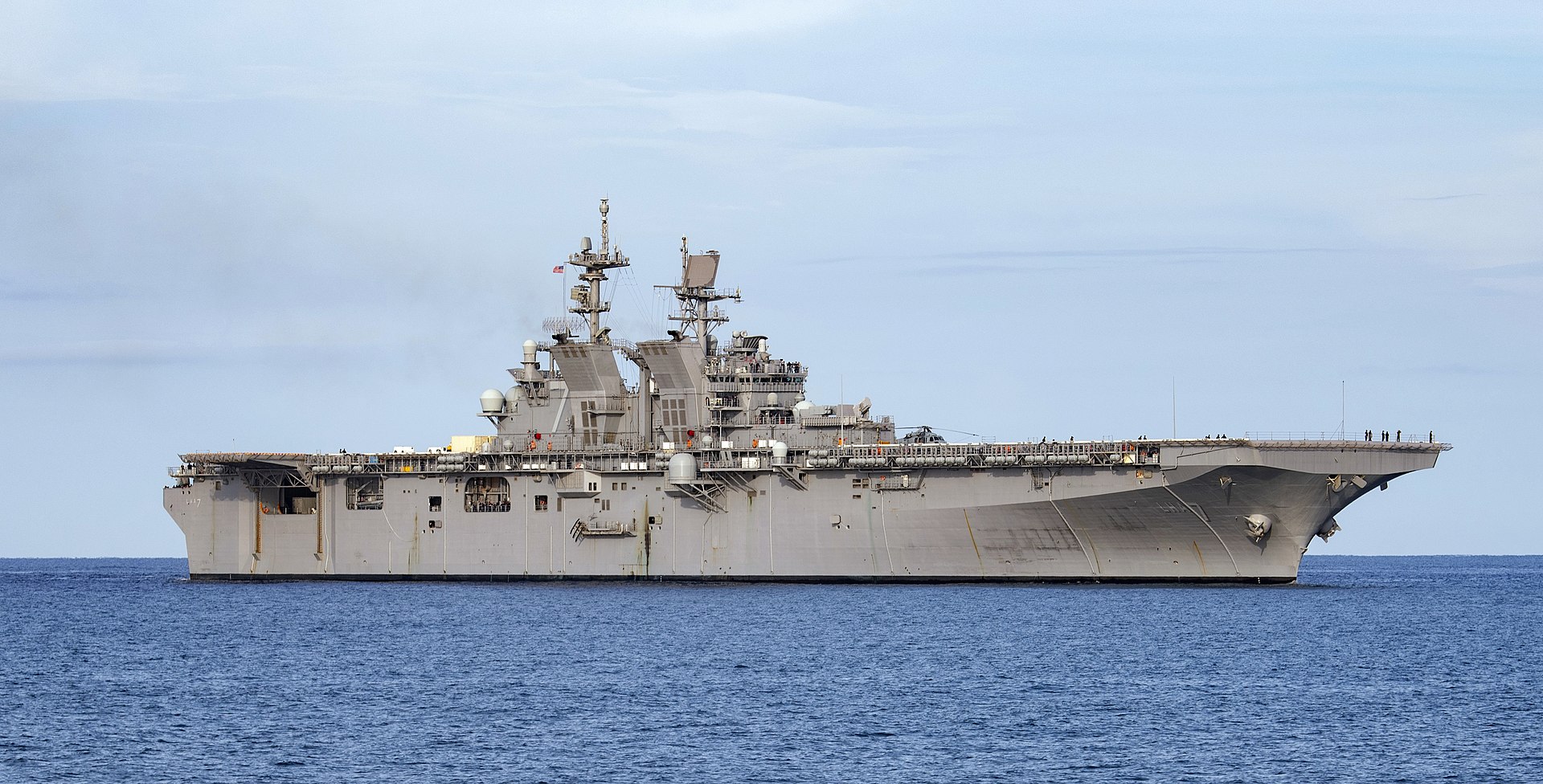
Singapore — The massive gray silhouette of the USS Tripoli (LHA-7) cut through the hazy waters of the Singapore Strait on Tuesday, offering a rare public glimpse of a high-stakes U.S. military movement amid escalating tensions in the Middle East. Eyewitnesses and ship-spotters along Singapore’s southern shores captured the America-class amphibious assault ship as it steamed westward, reportedly carrying elements of the Okinawa-based 31st Marine Expeditionary Unit (MEU) en route to reinforce American forces in the region.
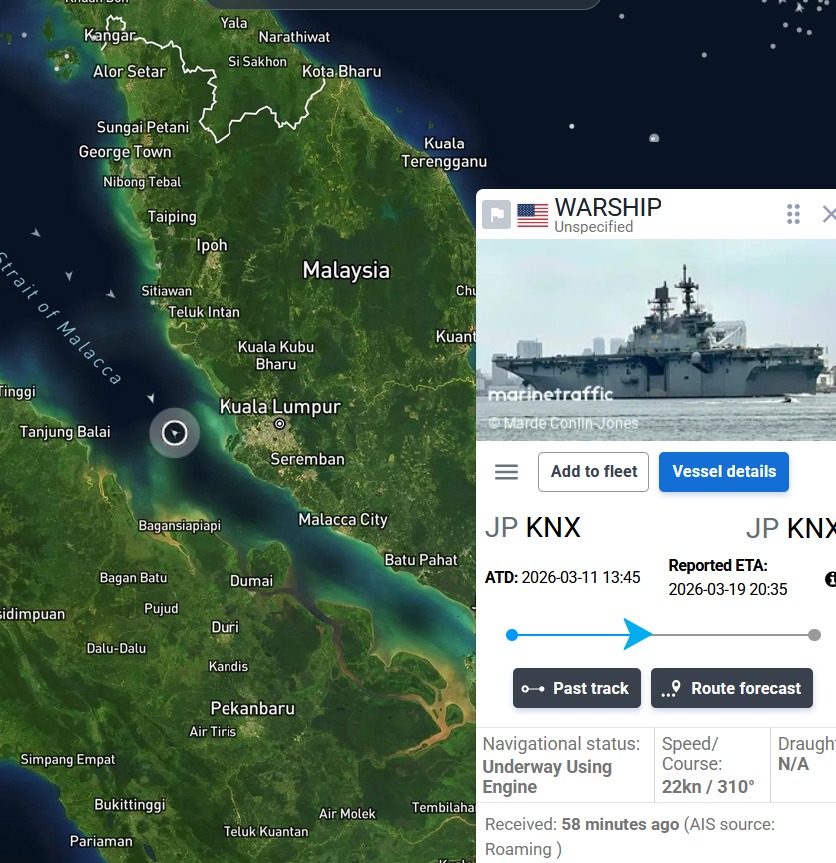
According to maritime tracking data and multiple news outlets, the 45,000-ton, 850-foot vessel — essentially a small aircraft carrier capable of embarking F-35B stealth fighters, MV-22 Osprey tilt-rotors, attack helicopters, and landing craft — was observed approaching the southwestern edge of the South China Sea and entering the busy Singapore Strait on March 17. Automatic Identification System (AIS) signals briefly tracked an “unspecified U.S. warship” departing the Okinawa area on March 11 and cruising at around 22 knots through the South China Sea before nearing Singapore.
The transit comes as the Pentagon rushes approximately 2,200–2,500 additional Marines and sailors to the Middle East during the third week of the U.S.-Israeli conflict with Iran. U.S. officials have confirmed the 31st MEU — a versatile rapid-response force equipped for amphibious assaults, evacuations, and special operations — was ordered to deploy aboard the Tripoli Amphibious Ready Group. The ship is the lead vessel in the group, which typically includes the amphibious transport docks USS New Orleans (LPD-18) and USS San Diego (LPD-22), though their exact positions could not be independently verified in public tracking data on Tuesday.“US Navy ships often move with AIS transponders turned off,” one report noted, explaining why the Tripoli’s appearance in one of the world’s busiest shipping corridors provided such a visible window into an otherwise opaque deployment. The Tripoli, forward-deployed to Sasebo, Japan, left its home waters carrying a full load of aircraft visible on its expansive flight deck, including F-35Bs and Ospreys. Local Singapore ship-spotters and international media, including Reuters photographer Edgar Su, documented the warship gliding past the city-state’s coastline against a backdrop of container vessels and lush green islands.This movement signals a significant U.S. buildup in the region, where roughly 50,000 American troops are already stationed. Pentagon sources have not disclosed the exact mission or landing zone for the Marines, but analysts suggest the MEU could support amphibious operations, provide additional air cover, or bolster security around key chokepoints such as the Strait of Hormuz.The sighting has drawn attention across Asia and beyond, with social media and local outlets buzzing about the unusual visibility of the powerful U.S. asset just days after departure orders were issued. As the Tripoli continues through the Malacca Strait and into the Indian Ocean, its journey — expected to take up to two weeks — underscores Washington’s determination to project power rapidly across the globe.U.S. 7th Fleet and 5th Fleet spokespersons have yet to issue official comments on the transit or final destination. The deployment forms part of a broader reinforcement effort that includes carrier strike groups already operating in the Middle East. For Singapore, the brief passage served as a vivid reminder of the strategic importance of its maritime crossroads — and the global forces that continue to navigate them in times of crisis.